

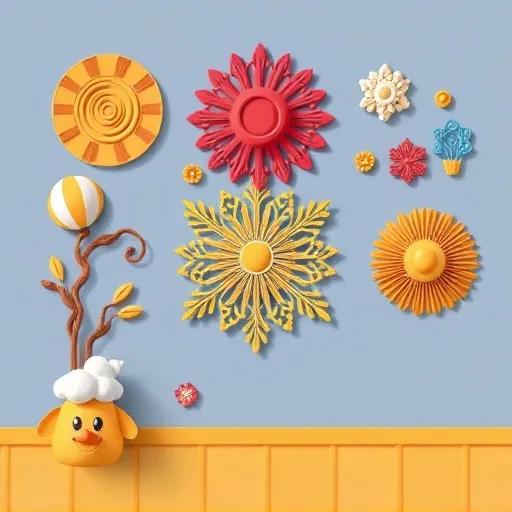
3D printed wall deco
What Exactly Is 3D Printed Wall Decor?
So what is 3d printed wall decor, really? At its core, it's decorative wall art made through additive manufacturing — which basically means a machine builds the piece layer by layer from a digital design file. No carving, no molding, no casting. Instead, the printer lays down material — usually plastic filament, resin, or composite compounds — until a full three-dimensional object takes shape. Pretty wild when you think about it, right?
The payoff is wall art with genuine depth, texture, and geometry. We're definitely not talking about flat canvas prints here. Think sculptural panels, geometric reliefs, botanical silhouettes, abstract flowing forms, and even functional pieces like floating shelves with built-in patterns. These pieces throw shadows, catch light in ways that flat art just can't, and bring a tactile quality to a room that two-dimensional pieces simply don't have. That's the magic of 3d printed wall decor — it changes how a wall feels, not just how it looks.
What makes this whole category so compelling in 2026 is accessibility. Just a few years back, custom 3d printed wall decor was strictly a niche hobbyist thing. Now? Thanks to a maturing ecosystem of independent designers, print-on-demand services, and increasingly capable home printers, anyone can get their hands on unique wall pieces — or create their own — without needing an engineering degree or a workshop full of tools.
Why 3D Printed Wall Art Is Having a Major Moment in 2026
Timing really matters here. Several factors have converged over 2025 and 2026 to push 3d printed wall decor straight into the mainstream:
- Sustainability concerns: Buyers are actively moving away from disposable, mass-produced decor. Plenty of printing processes now use recycled filaments and bio-based materials, and printing on demand cuts waste compared to traditional manufacturing.
- Customization demand: People want their spaces to reflect who they are. Being able to tweak a design file — swap dimensions, colors, or patterns — is a massive draw for 3d printed wall decor fans.
- Material innovation: New composite filaments now mimic wood, stone, and ceramic, giving printed pieces a premium look that simply wasn't possible a few years ago.
- Cost efficiency: A large, statement-making sculptural wall piece can be printed for a fraction of what a comparable artisan-made piece would run you.
- Designer accessibility: Countless independent designers now sell digital files, so it's easy to support small creators while scoring something genuinely unique — a huge win for the 3d printed wall decor space.
In short, 3d printed wall decor sits right at the intersection of personalization, sustainability, and affordability — three things modern buyers care deeply about.
Popular Styles and Design Trends Shaping 3D Printed Wall Decor in 2026
Wondering what's actually trending this year? Here's what's dominating the 3d printed wall decor scene:
1. Geometric Relief Panels and Interlocking Hexagon Wall Art
Interlocking hexagons, repeating wave patterns, faceted diamonds — geometric relief panels remain the workhorse of 3d printed wall decor. They work beautifully as large-scale installations above sofas or as accent strips in hallways. The shadow play is incredible, especially with warm ambient lighting.
2. Biophilic Botanical Forms and Nature-Inspired Organic Shapes
Nature-inspired shapes are everywhere in 2026. Think leaf silhouettes, branching tree structures, and organic flowing lines that mimic vines. These pieces resonate because they bring a sense of calm and connection to nature indoors — and this trend shows zero signs of slowing down in the 3d printed wall decor world.
3. Minimalist Line Art Sculptures and Scandinavian Wireframe Designs
Single-line abstract forms, floating face profiles, and delicate wireframe-style sculptures are hugely popular for modern and Scandinavian-inspired interiors. They're lightweight, cheap to print, and make small rooms feel considered rather than cluttered — a perfect entry point into 3d printed wall decor.
4. Textured Statement Pieces and Layered Ridge Wall Panels
Large, tactile panels with layered ridges, scales, or woven textures are being used as focal points. These pieces are often printed in matte finishes and neutral tones — sand, charcoal, terracotta — to let the texture do all the talking.
5. Functional Decor Hybrids and Wall-Mounted Planter Shelving
Wall-mounted planters with sculpted exteriors, decorative hooks with patterned backplates, and printed shelving with integrated geometric designs — functional wall decor is a fast-growing category. It solves the "pretty but useless" problem that plagues a lot of decorative art, and it's a smart way to work 3d printed wall decor into everyday life.
6. Custom Typography and Personalized Symbol Wall Pieces
Printed letterforms, abstract symbols, and personalized motifs stay popular for gifts and kids' rooms. The ability to customize names, dates, or shapes makes this a strong niche within 3d printed wall decor.
Materials: What You Need to Know Before Buying 3D Printed Wall Decor
Not all 3d printed wall decor is created equal, and material choice dramatically affects appearance, durability, and price. Here's a quick breakdown:
- PLA (polylactic acid): The most common material for decorative pieces. It's plant-based, comes in endless colors, and holds fine detail really well. Downside: it can soften in high heat, so avoid direct sunlight in hot climates.
- PETG: More durable and heat-resistant than PLA, with a slightly glossy finish. Great for functional pieces or sun-exposed walls.
- Resin: Delivers ultra-smooth surfaces and intricate detail — ideal for small, high-precision decorative objects. Usually pricier and more brittle.
- Composite filaments (wood-fill, stone-fill, marble-fill): These mimic natural materials convincingly and are increasingly popular for premium-looking wall pieces. They often need post-processing (sanding, staining) for the best finish.
- Recycled and bio-based filaments: A growing category in 2026, appealing to eco-conscious buyers. Quality has improved dramatically, so you no longer have to sacrifice aesthetics for sustainability.
Pro tip: always check which material a seller uses before buying 3d printed wall decor. A piece that looks stunning in photos can feel cheap if it's printed in low-grade filament with visible layer lines.
How to Choose the Right 3D Printed Wall Decor for Your Space
Buying 3d printed wall decor isn't just about liking a design — context matters. Here's a practical framework:
Consider Scale and Proportion for Large Blank Walls
A common mistake is going too small. On a large blank wall, a cluster of small pieces often looks lost. Either go big with a single statement panel or create a deliberate gallery arrangement with varied sizes. Measure your wall first — seriously, sketch it out.
Match the Finish to Your Lighting and Room Ambience
Matte finishes absorb light and feel cozy; glossy finishes reflect and add energy. If your room gets strong direct sun, matte prevents glare. In dim rooms, glossy or semi-gloss pieces catch ambient light and add dimension — a small detail that makes a big difference with 3d printed wall decor.
Think About Color Strategy and Neutral Palette Pairing
Neutral-toned 3D pieces (white, beige, gray, black) are versatile and let texture lead. Bold colors work as accents but can clash if you're not careful. A safe approach: pick one accent color that already appears in your room and echo it in the wall piece.
Check Weight and Mounting Requirements Before You Install
Printed pieces vary wildly in weight. Large solid panels can be surprisingly heavy, while hollow or lattice designs stay lightweight. Always confirm the mounting method — hidden brackets, French cleats, adhesive strips, or screws. For renters, lightweight pieces with damage-free adhesive options are a total lifesaver.
Verify Layer Quality and Post-Processed Finish Details
Layer lines are inherent to FDM printing, but good designers orient prints to minimize visible stepping, and quality sellers offer sanded or post-processed finishes. If buying in person, look closely at the surface. If buying 3d printed wall decor online, check reviews and close-up photos.
The Future of 3D Printed Wall Decor: Multi-Material Printing and AI Design
Looking ahead, a few developments are worth watching. Multi-material printing is enabling pieces that combine rigid structure with flexible accents. Larger-format printing is making full-wall sculptural installations more feasible. And AI-assisted design tools are lowering the barrier for everyday people to create custom pieces — you describe what you want, refine a generated concept, and print it. Expect 3d printed wall decor to get even more personal and more creative.
Sustainability will also keep shaping the category. Expect more brands to highlight recycled content, closed-loop filament programs, and take-back schemes. For buyers, that means more genuinely eco-friendly options without compromising on looks — a win-win for anyone shopping for 3d printed wall decor in 2026.